Find the Root Cause of a Failing Service
Checkout is failing. The alerts are loud: HTTP 500s climbing on PlaceOrder. But the checkout pods are green: running, no restarts, nothing in the events. The symptom is in one service; the cause is somewhere else.
This is the investigation NuBi is built for. Below is a single conversation that goes from "checkout is broken" to the exact line of code responsible, and the fix. You ask in plain language and drill down on what comes back.
Start with the symptom
Ask the question you'd ask a senior engineer.
You ask NuBi
Checkout is throwing errors in the demo namespace. What's the root cause?
NuBi checks checkout, then walks the Knowledge Graph downstream to follow the failure to its source. It answers with a 5-Whys chain:
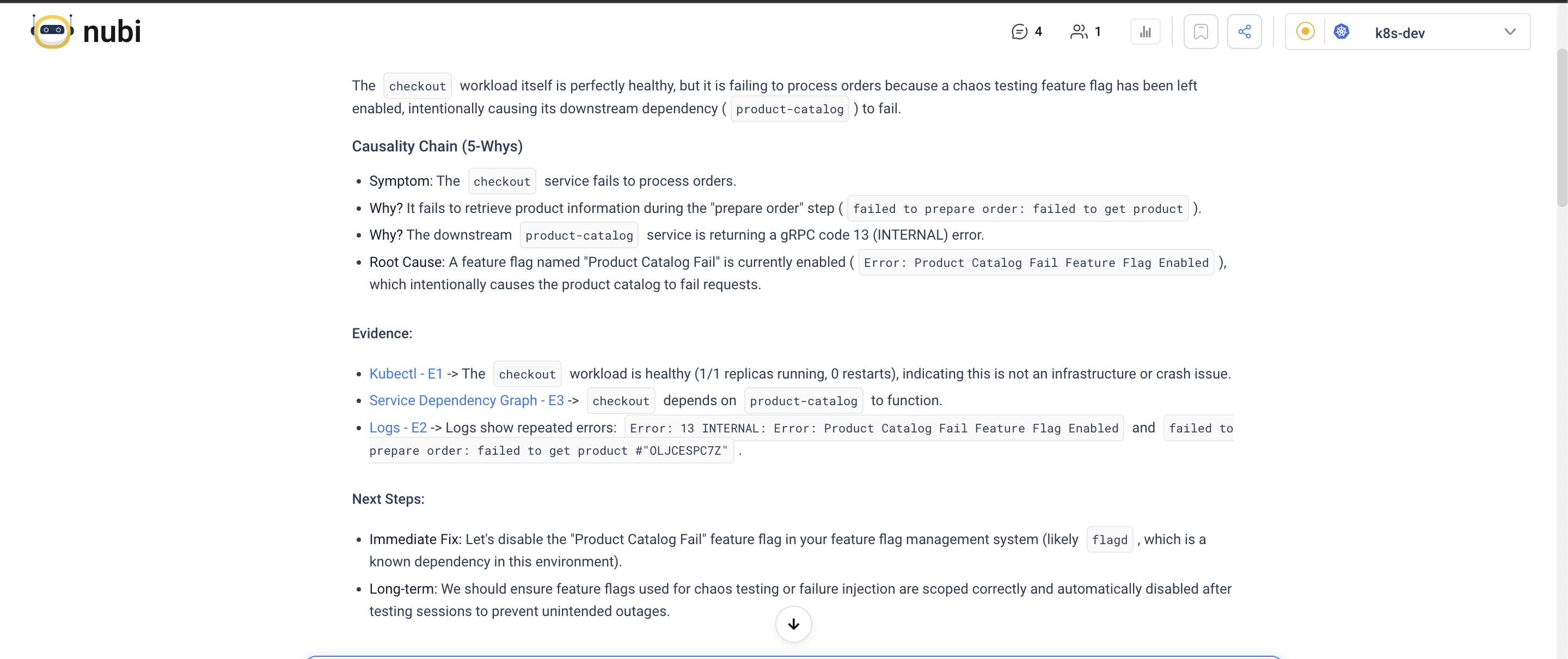
Checkout is healthy. The problem is downstream: product-catalog is returning gRPC code 13 (INTERNAL) because a feature flag named "Product Catalog Fail" is switched on.
Confirm the dependency
You want it explicit: which service, and how the failure travels.
You ask NuBi
Which service is actually causing it, and how are they connected?
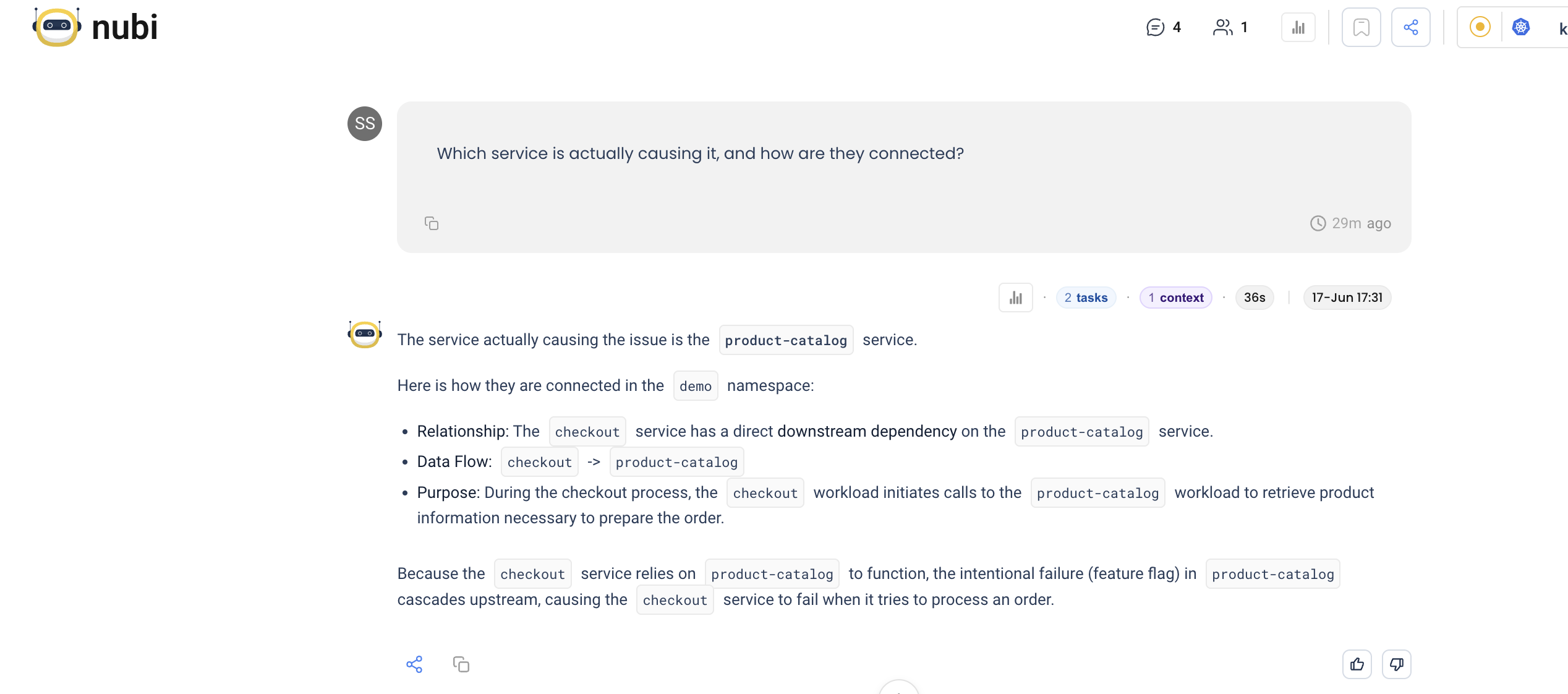
Now the relationship is explicit: checkout calls product-catalog during PlaceOrder to fetch product details, so a failed lookup breaks the order. NuBi traced that through the dependency graph.
Demand evidence
Conclusions are cheap. Ask for proof.
You ask NuBi
Show me the exact error and a failing trace.
NuBi pulls the literal error strings and a real failing request, with the endpoint, status, duration, and trace ID:
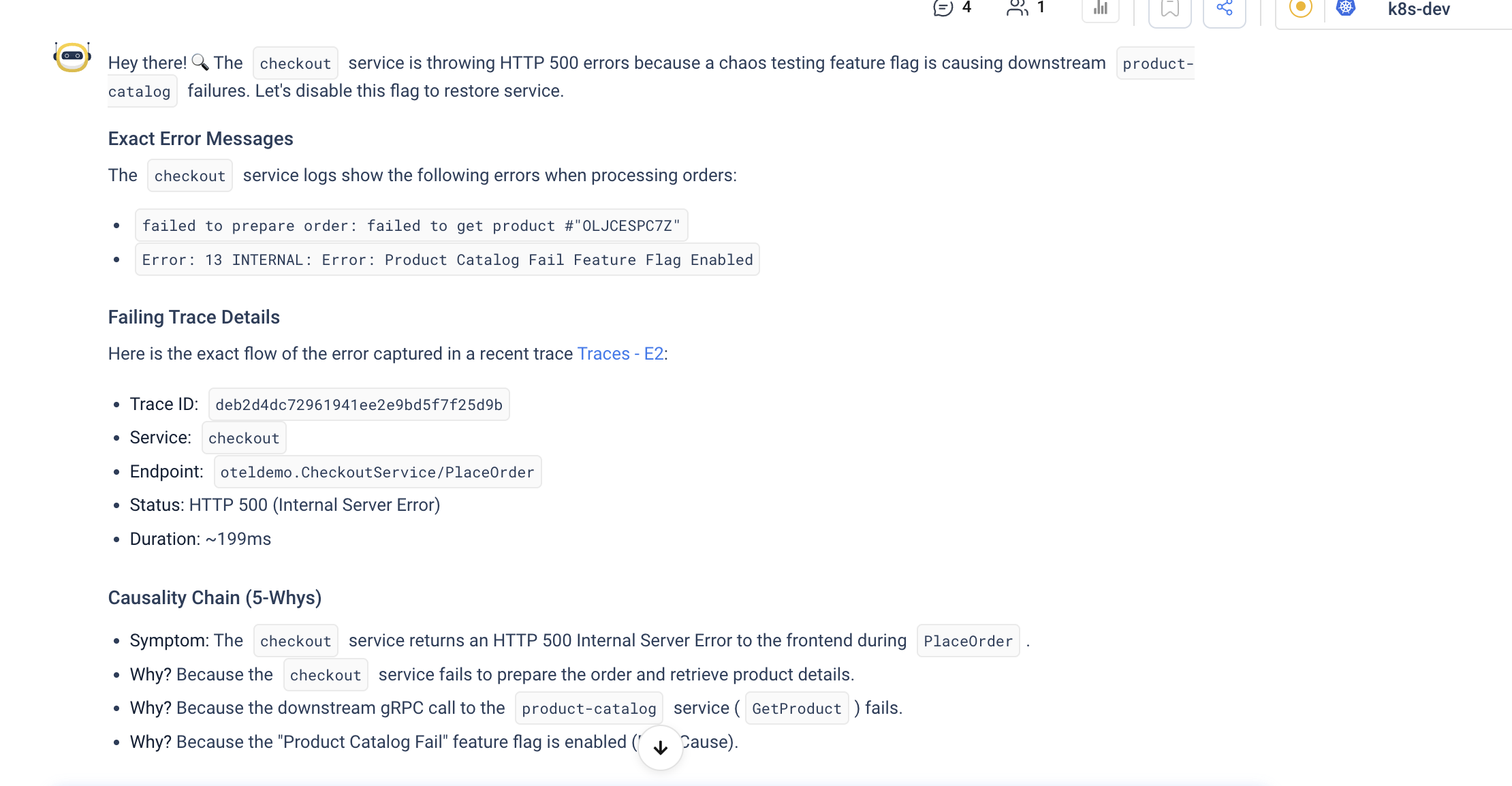
failed to get product "OLJCESPC7Z". 13 INTERNAL: Product Catalog Fail Feature Flag Enabled. A PlaceOrder trace returning 500. No hand-waving. The cause is on the record.
Go to the code
The runtime cause is settled. Now find the line.
This step uses NuBi's Code Agent, which reads the service's repository. Connect it as a source-control integration first. Without it, you still get everything above.
You ask NuBi
Look at the product-catalog source and tell me which code path returns the error.
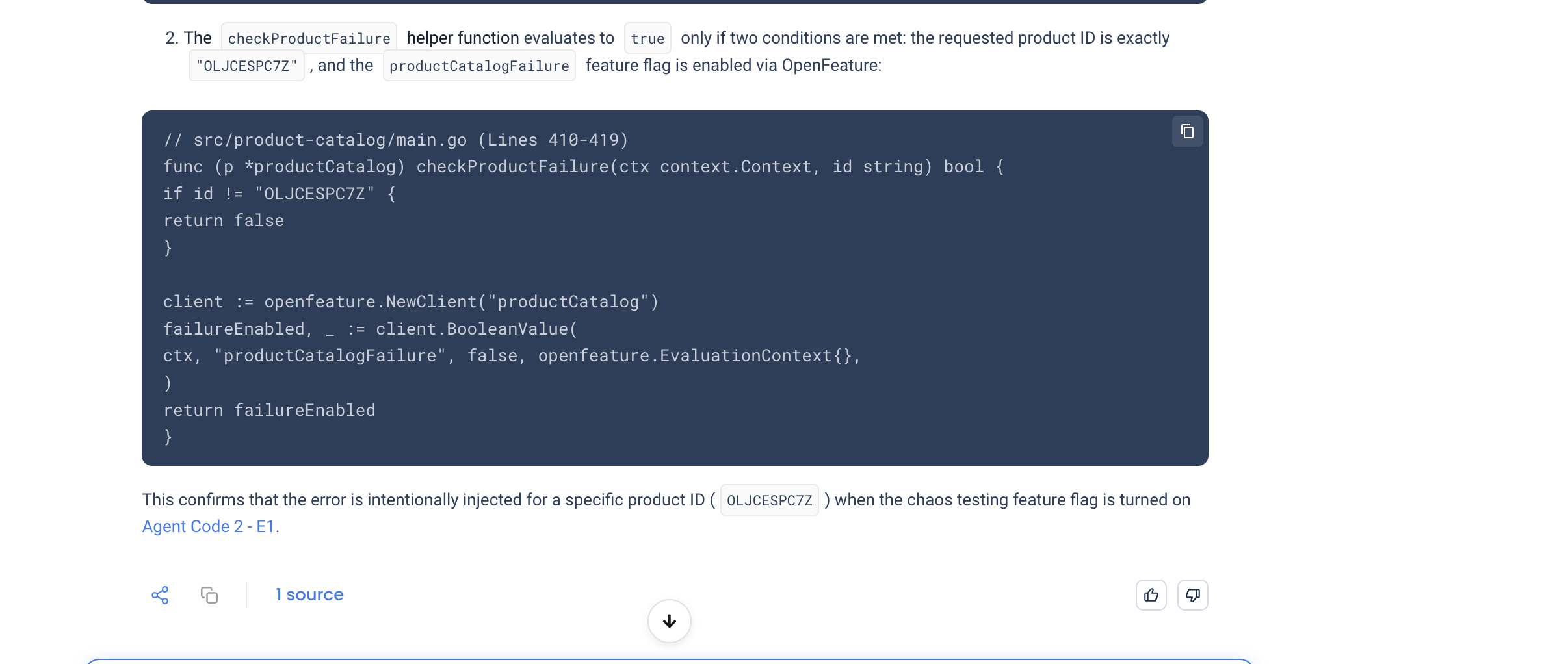
There it is: checkProductFailure returns an error when the requested product is OLJCESPC7Z and the flag is on. NuBi went from a customer-facing 500 to a named function in a cited file.
Close it out
You ask NuBi
How do I fix it?
NuBi doesn't just name the fix. It hands you the exact steps: which ConfigMap holds the flag, the command to edit it, the field to flip, and what happens after you save.
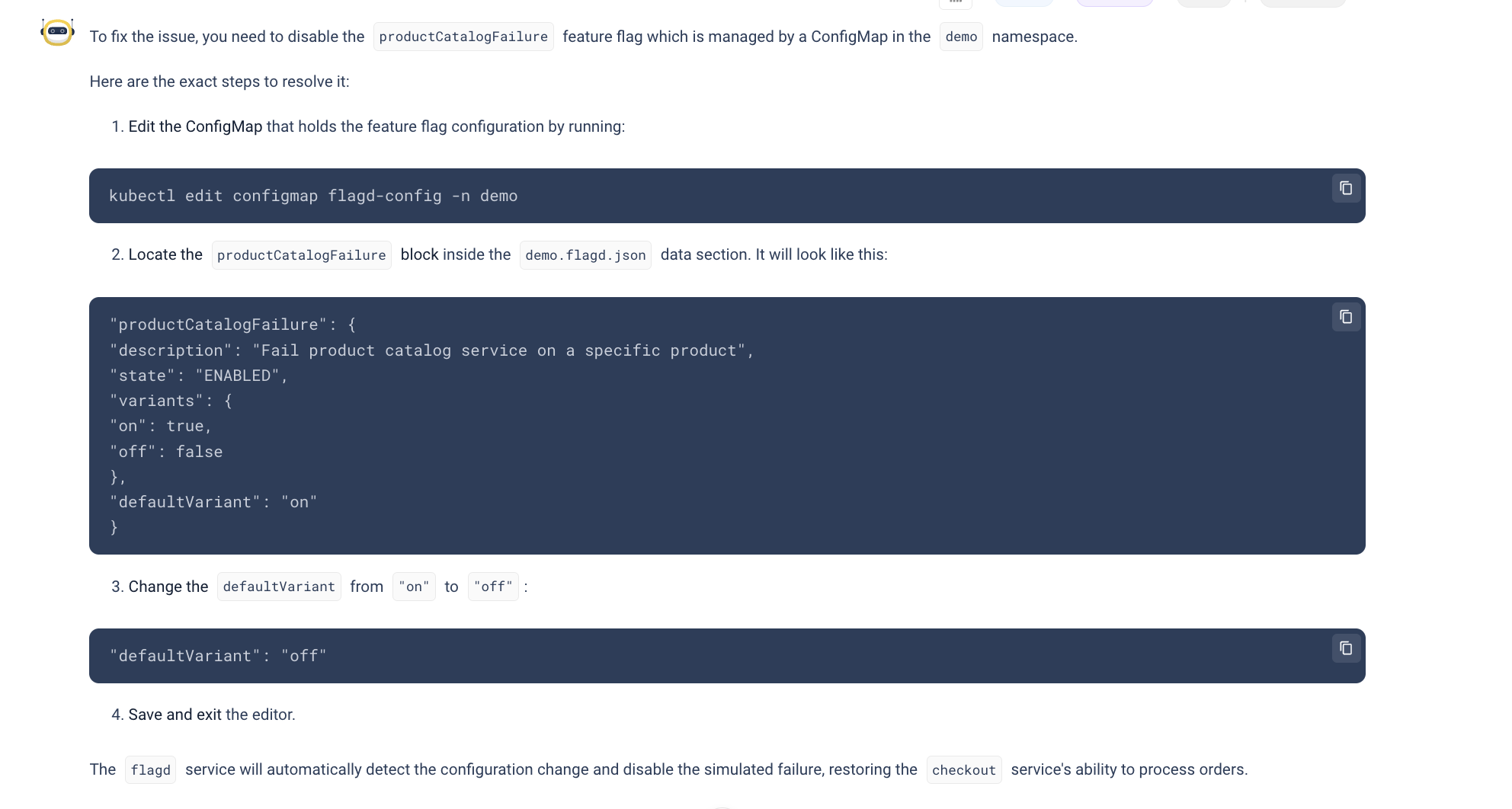
That's the whole fix. If you have a ticketing or source-control integration connected, follow with "open a ticket with the evidence" or "open a pull request to fix it" and NuBi carries the investigation into a tracked action.
Tips for your own investigations
- Lead with the symptom, not your theory. Tell NuBi what's failing and let it find the cause. "Checkout is erroring" beats "is product-catalog down?", because you don't yet know it's product-catalog.
- Drill down, don't restart. NuBi keeps the thread. "Which service?" → "show me a trace" → "now the code" gets further than three cold questions.
- Always ask for the trace. A failing trace ID turns a plausible answer into a provable one.
- Name the scope. A namespace or service in the question makes the answer faster and sharper.
That whole chain ran in one conversation across several agents: triage, knowledge-graph traversal, a failing trace, the offending code. Along the way NuBi recovered from a failed log fetch on its own and compressed its own working context to stay focused. You stitched nothing together; you just asked.